What’s the difference between a machining center and a CNC lathe? A machining center is a type of CNC machine tool. A CNC milling machine without a tool magazine is a CNC milling machine, while one with a tool magazine is called a machining center, also known as a CNC machining center. A machining center, abbreviated as CNC, is a high-efficiency automated machine tool composed of mechanical equipment and a numerical control system, used for machining complex-shaped workpieces.
A machining center is a CNC machine tool equipped with a tool magazine and automatic tool changer, capable of performing multiple machining operations on a single workpiece clamping. Machining centers are highly mechatronic products. After workpiece clamping, the CNC system controls the machine tool to automatically select and change tools according to different operations, automatically set tools, and automatically change spindle speed and feed rate, enabling continuous completion of multiple operations such as drilling, boring, milling, reaming, and tapping. This significantly reduces workpiece clamping time and auxiliary process time such as measurement and machine tool adjustment, resulting in excellent economic benefits for machining parts with complex shapes, high precision requirements, and frequent product changes.
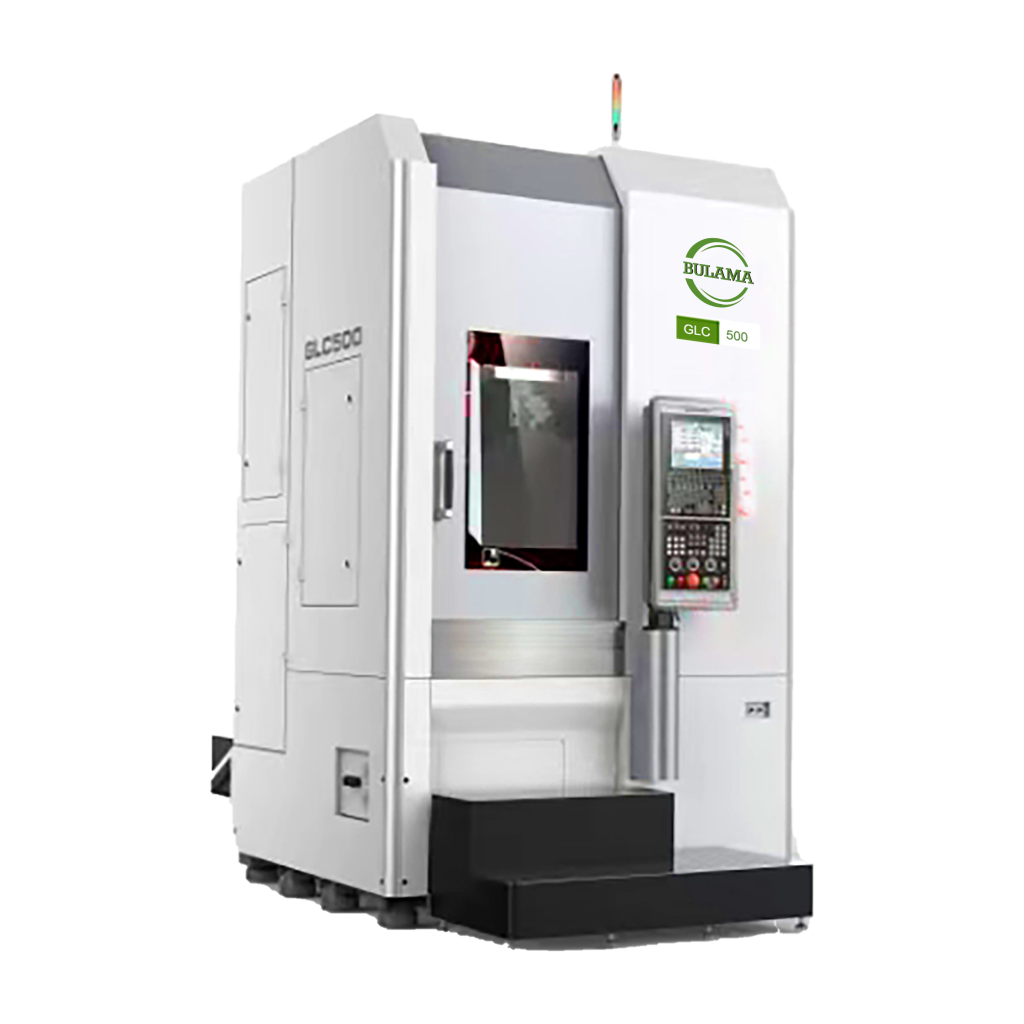
Machining centers can be classified by the number of axes: three-axis, four-axis, and five-axis machining centers.
1. Three-axis CNC milling remains one of the most popular and widely used machining processes. In three-axis machining, the workpiece remains stationary while the rotating tool cuts along the x, y, and z axes. This is a relatively simple form of CNC machining, suitable for manufacturing products with simple structures. It is not suitable for machining complex geometries or products with complex components. Because cutting can only occur on three axes, the machining speed may also be slower than four-axis or five-axis CNC, as the workpiece may need to be manually repositioned to achieve the desired shape.
- In four-axis CNC milling, a fourth axis is added to the movement of the cutting tool, allowing rotation about the x-axis. Now there are four axes—x-axis, y-axis, z-axis, and a-axis (rotation about the x-axis). Most four-axis CNC machine tools also allow workpiece rotation, known as the b-axis, so the machine can function as both a milling machine and a lathe. Four-axis CNC machining is ideal if you need to drill holes on the side of a part or on the curved surface of a cylinder. It significantly speeds up the machining process and provides high precision.
- Five-axis CNC machining: Five-axis CNC milling adds an extra rotary axis compared to four-axis CNC. The fifth axis is rotation about the y-axis, also known as the b-axis. The workpiece can also rotate on some machines, sometimes referred to as the b-axis or c-axis. Due to its high versatility, 5-axis CNC machining is used to manufacture complex precision parts, such as the Universal five-axis gantry machining center, as shown in the image below. Examples include medical components for artificial limbs or bones, aerospace components, titanium components, oil and gas machinery components, and military products.